Maybe your milk never came in the way the books promised. Maybe you went back to work, or your baby never latched, or breastfeeding was wrecking your mental health, or you simply looked at the whole situation and decided formula was right for your family. Whatever brought you here, you may have arrived carrying a backpack full of guilt that absolutely nobody handed you with good evidence.
Let's set that backpack down. Commercial infant formula is a complete, regulated food designed to grow a healthy baby — and feeding your baby well with it is a skill worth doing right, not a consolation prize. This guide covers how much formula your baby needs by age, how to mix and store it safely, how to bottle-feed in a calm, baby-led way, and how to combine breast and bottle if that's your plan. No judgment, just the numbers.
What the science says about formula
Here's the part that should lift the guilt: all infant formula sold in the US is regulated by the FDA and must meet the same strict nutritional standards. The CDC is blunt about it — a standard, iron-fortified, cow's-milk-based formula provides the nutrition a healthy full-term baby needs, and the pricey "premium" tub on the shelf isn't nutritionally superior to the store brand sitting next to it. Generic and name-brand formulas in the same form are held to the same federal requirements.
A few things the CDC and AAP want you to know when choosing:
- Iron-fortified, cow's-milk-based formula is the standard first choice for most babies. Start there unless your pediatrician steers you elsewhere.
- "Low-iron" formula is not recommended — babies need the iron.
- Specialty formulas (soy, hypoallergenic, anti-reflux) solve specific medical problems and are best chosen with your pediatrician, not based on a fussy evening or a marketing claim.
- Skip plant-based "milks" and homemade formula entirely under 12 months — they don't meet a baby's needs and can be dangerous.
Breastfeeding has genuine, documented benefits, which is why it's recommended where it works. But "recommended" describes a goal, not a grade — and a thriving, well-fed baby with a supported parent is the entire point.
How much formula, by age
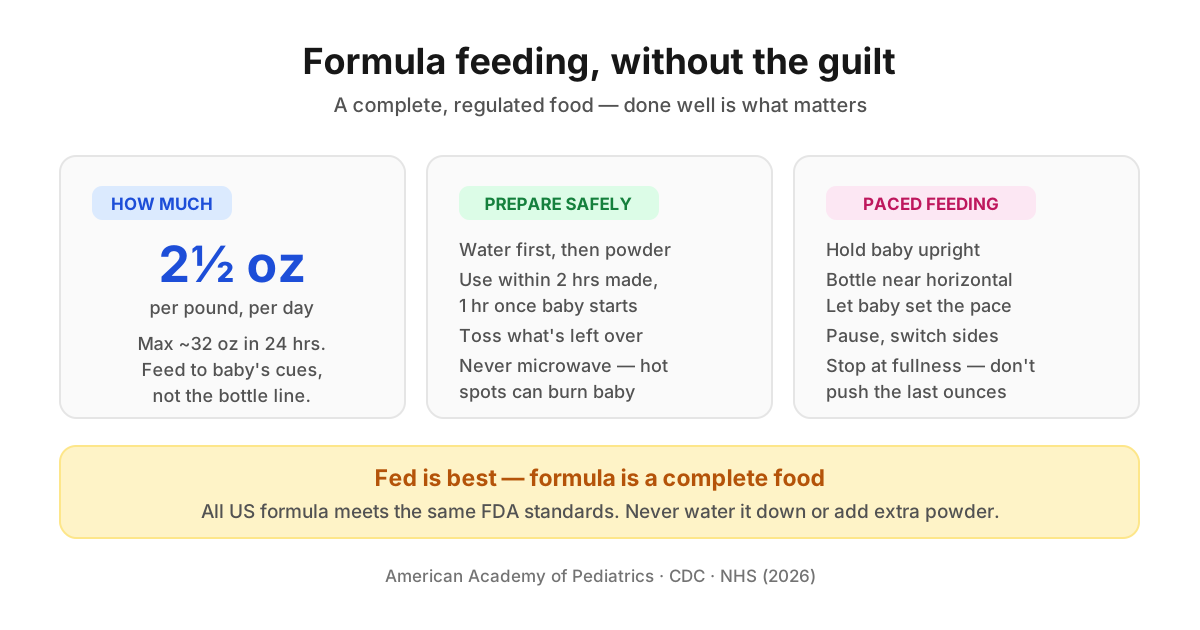
You can't out-think your baby's appetite, but a few anchors help you know roughly what's normal. The handy AAP rule of thumb: a baby needs about 2½ ounces of formula per pound of body weight per day, up to a maximum of around 32 ounces in 24 hours. A 10-pound baby, then, lands somewhere near 25 ounces a day.
Here's how that typically breaks down by age, per the AAP and CDC:
- First days: 1 to 2 ounces every 2 to 3 hours — about 8 to 12 feedings in 24 hours. Tiny stomach, frequent refills.
- End of the first month: 3 to 4 ounces every 3 to 4 hours, settling into a more predictable rhythm.
- Around 6 months: 6 to 8 ounces at 4 or 5 feedings a day, often with solid foods just beginning.
Treat these as ranges, not quotas. Babies generally take what they need and stop when they're full — your job is to offer, not to make the bottle disappear. The most common formula-feeding mistake is gently pushing those last few "for me?" ounces. A baby who turns away, gets fidgety or easily distracted, seals their lips, or slows to a stop is telling you they're done. Honor that, and you teach healthy appetite regulation from the start. (When solids enter the picture, our guide to starting solids: when and how covers how formula and first foods overlap.)
How to prepare and store formula safely
This is the section where the "do it well" really matters, because powdered formula is not sterile and a few simple habits keep it safe. Per the CDC's preparation and storage guidance:
- Wash your hands and clean the surface before you start.
- Use water from a safe source, and measure the water first, then add the powder — exactly as the label says. More scoops won't "fill baby up"; it can dangerously concentrate the formula. Fewer scoops dilutes the nutrition.
- Use prepared formula within 2 hours of making it, and within 1 hour once your baby starts drinking. After that, toss it.
- If you won't use it within 2 hours, refrigerate immediately and use within 24 hours.
- Throw away whatever's left in the bottle after a feed — bacteria from baby's mouth multiply in the leftover milk.
- Never microwave a bottle. Microwaves heat unevenly and create hot spots that can scald baby's mouth and throat. Warm it in a bowl of warm water instead, and test a drop on your wrist.
There's one extra layer for the most vulnerable babies. For infants under 2 months old, born premature, or with a weakened immune system, both the CDC and NHS recommend mixing powdered formula with water at about 70°C (158°F) to kill Cronobacter, a rare but serious bacterium. The NHS method: boil the water, let it cool for no more than 30 minutes so it stays at least 70°C, then mix. Make each feed fresh, one at a time, and don't batch-prepare bottles in advance for these babies. The NHS also advises sterilising bottles and teats until your baby is 12 months old.
Paced bottle feeding: the calm way to do it
How you give the bottle matters almost as much as what's in it. Paced (or responsive) bottle feeding lets your baby control the flow and take breaks, which mimics breastfeeding, reduces gulping and gas, and helps prevent overfeeding. The NHS describes the core moves:
- Hold your baby fairly upright, supporting their head so they can breathe and swallow comfortably — never feed a baby lying flat.
- Keep the bottle close to horizontal, tilted just enough to fill the teat. This slows the flow so baby sucks actively instead of having milk pour in.
- Let baby set the pace. Offer the teat to their lips and let them draw it in; pause when they pause; switch sides partway through, like at the breast.
- Watch for fullness and stop there. Turning the head, pushing the bottle away, or losing interest all mean "done." Don't force the last bit.
- Hold your baby, not the bottle. Never prop a bottle and walk away — it's a choking and ear-infection risk, and feeding is connection time.
A great teat is one where milk drips slowly, not streams. If your baby is gulping, coughing, or finishing a bottle in two minutes flat, try a slower-flow teat and more pauses.
Logging those early feeds — amounts, times, which bottle, how baby tolerated it — turns a blurry week into a pattern you and your pediatrician can actually read. You can jot each bottle in seconds in the TinyWins journal and watch your baby's rhythm emerge.
Combining breast and bottle
Plenty of families do both — some breast milk, some formula — and combination feeding is a completely valid, common choice, not a failure of either method. A few practical notes:
- If you're still building supply, introducing formula very fast can reduce how much milk you make, since the breast makes milk on a use-it feedback loop. Go gradually when you can, and consider pumping when you give a formula bottle to protect supply.
- There's no nutritional penalty to a baby who gets both breast milk and formula. Your baby's gut handles the mix fine.
- Expect different diapers. Formula-fed and combo-fed babies often have firmer, tan-colored, stronger-smelling poops than exclusively breastfed babies. That's normal, not a problem.
- A bottle of expressed breast milk follows the same paced technique — and similar storage caution.
If breastfeeding is also part of your picture and you're still finding your footing there, our breastfeeding and latch starter guide is the companion to this one.
When to call your pediatrician
Most formula-feeding questions are answered by the label and a calm bottle. But reach out to your pediatrician promptly if your baby:
- Has far fewer wet diapers than usual (a sign of dehydration), or shows a dry mouth, no tears when crying, or a sunken soft spot
- Isn't gaining weight at well visits, or seems persistently hungry even after appropriate amounts
- Is vomiting forcefully or repeatedly (not just normal spit-up), or has blood or mucus in the stool, persistent diarrhea, or a swollen, hard belly
- Develops a rash, hives, swelling, wheezing, or significant fussiness after feeds, which can signal a milk-protein allergy or intolerance — don't switch to a specialty formula on your own; let your pediatrician guide it
- Is too sleepy to feed, consistently refuses bottles, or feeds far less than expected for their age
And one safety note worth repeating plainly: never water down formula to stretch a tub, and never add extra powder to "fatten it up." Both throw off the careful balance of nutrients and water that keeps your baby safe. If cost is the worry, ask your pediatrician or a WIC office about assistance — that's a solvable problem, and you're not the first to ask.
Fed is best — and you're doing it
Formula feeding is not a backup plan you should apologize for. It's a safe, complete, well-regulated way to nourish your baby, and doing it thoughtfully — right amounts, safe mixing, paced bottles, attention to fullness — is exactly the kind of attentive parenting that guilt tries to convince you you're not capable of. You are.
Measure carefully, follow your baby's cues, keep the bottles clean, and call your pediatrician when something feels off. The rest is just feeding your baby, which you're doing, which is the whole job.
This article is educational and not medical advice. Always check with your pediatrician/provider.