Somewhere in the first two weeks after a baby arrives, a lot of new parents find themselves crying in the kitchen over nothing, snapping at people they love, and lying awake even when the baby is finally asleep. If that's you: you are not failing, and you are very much not alone. But there's an important line between the rough, normal adjustment of those first days and something that deserves real help — and almost nobody explains where that line is.
So let's draw it clearly. Here's what's expected, what's not, what's an emergency, and exactly who to call.
What the science says: this is common, and it's treatable
Start with the number that should make you exhale: about 1 in 8 people who give birth report symptoms of postpartum depression, according to the CDC. It is one of the most common complications of having a baby — and one of the most treatable. Depression and anxiety can also show up during pregnancy, not only after.
It helps to think of perinatal mood changes as a spectrum, from the nearly universal to the genuinely urgent.
The baby blues: common, mild, and self-limiting
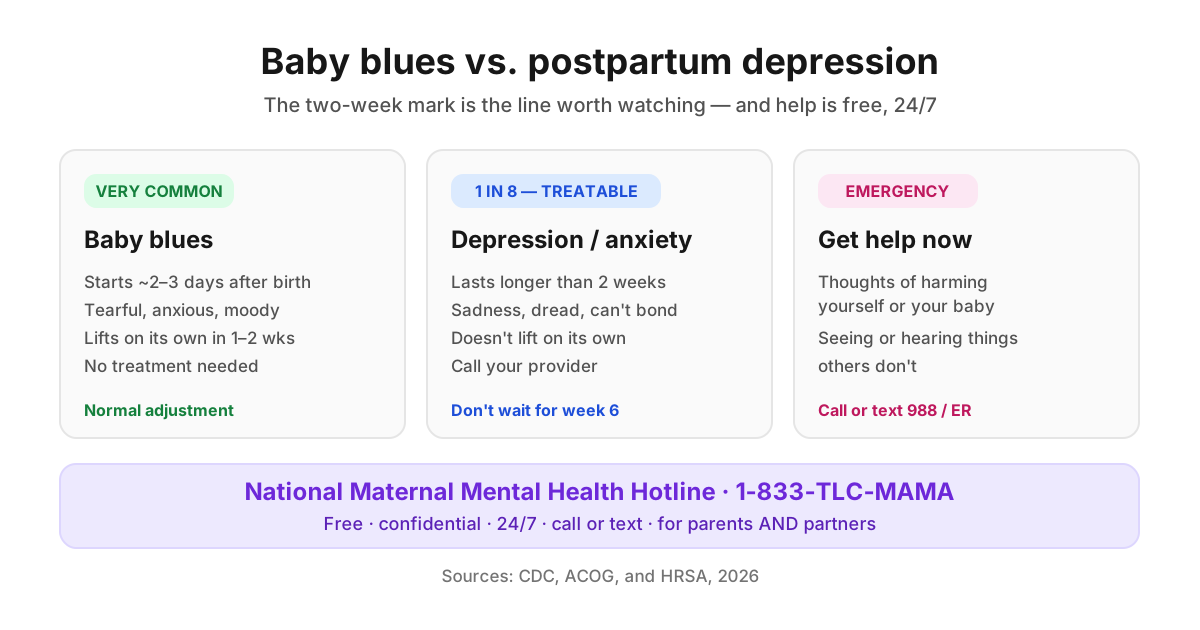
The "baby blues" hit a large majority of new mothers, and they are not a disorder. ACOG describes them as a stretch of feeling sad, anxious, tearful, and overwhelmed that starts about 2–3 days after birth and gets better on its own within a few days to two weeks — no treatment required.
Blame the timing on a perfect storm: a cliff-drop in pregnancy hormones, milk coming in, near-total sleep deprivation, and the sheer existential weight of being responsible for a tiny human. Signs that fit the "blues" picture:
- Crying easily, often without a clear reason
- Mood that swings from fine to weepy and back
- Feeling irritable, impatient, or "on edge"
- Trouble sleeping even when you have the chance
The defining feature of baby blues is that they lift on their own and don't keep you from functioning. If yours are fading by the end of week two, that's the expected path.
Postpartum depression and anxiety: when it's more than the blues
Postpartum depression (PPD) is the baby blues' more serious cousin. The clearest dividing line is time and intensity: PPD is more severe, and it lasts longer than two weeks and does not resolve by itself. It most often begins in the first few weeks after birth but can start any time in the first year. The CDC notes PPD symptoms are "more intense and last longer" than baby blues and can include crying more than usual, anger, and feeling distant from your baby.
Watch for these, especially past the two-week mark:
- Sadness, emptiness, or hopelessness most of the day, most days
- Loss of interest in things you used to enjoy
- Feeling like a bad parent, or feeling disconnected from your baby
- Excessive guilt, worthlessness, or that your family would be better off without you
- Eating or sleeping far too much or too little (beyond normal newborn chaos)
- Trouble bonding, or scary intrusive thoughts you can't shake
Postpartum anxiety often travels with — or instead of — depression: racing thoughts, a constant sense of dread, physical symptoms like a pounding heart, checking on the baby's breathing dozens of times a night. It's just as real and just as treatable, even though it gets far less airtime.
None of this is a character flaw or a sign you don't love your baby. Risk goes up with a personal or family history of depression and with little social support — not with how much you wanted this child.
Partners get it too
This isn't only a birthing-parent story. Roughly 1 in 10 fathers and non-birthing partners experience depression in the year after a baby arrives, and the odds climb when the other parent is also struggling. It can look different — irritability, withdrawal, working longer hours, anger instead of tears — which is exactly why it's so often missed. The support resources below are for partners too.
When to seek help — and when it's an emergency
Two separate thresholds. Know both.
Call your provider (don't wait for the six-week visit) if:
- Low mood, anxiety, or hopelessness lasts longer than two weeks
- Your symptoms are getting worse instead of better
- You can't sleep even when the baby is asleep, or you can't eat
- It's getting hard to care for yourself or your baby
- You just don't feel like yourself, and it's not lifting
You do not need to be certain, or to "earn" the call by being at rock bottom. Screening is now standard care: ACOG recommends that all pregnant and postpartum patients be screened for depression and anxiety, so your OB, midwife, and your baby's pediatrician all expect this conversation. Bring it up at any visit.
This is a medical emergency — get help right now if you:
- Have any thoughts of harming yourself or your baby
- See, hear, or believe things that others don't (this can signal postpartum psychosis, a rare but true emergency that comes on fast in the days after birth)
- Feel unable to keep yourself or your baby safe
The CDC's Hear Her campaign lists "thoughts about harming yourself or your baby" as an urgent maternal warning sign valid during pregnancy and for a full year after delivery. In a crisis, call or text 988 (the Suicide & Crisis Lifeline) or go to your nearest emergency room. Frightening intrusive thoughts that you find horrifying are common in anxiety and don't mean you'll act on them — but you don't have to sort that out alone, and a professional can help you tell the difference quickly.
How to actually ask for help
The hardest part is often the first sentence. A few that work:
- To your provider: "I think I might have postpartum depression. I'd like to be screened."
- To your partner or a friend: "I'm not okay, and I need you to help me make a call."
- To yourself: getting help is parenting. A treated parent is the most protective thing your baby has.
Save this number in your phone today, before you need it: the National Maternal Mental Health Hotline — 1-833-TLC-MAMA (1-833-852-6262). It's free, confidential, and available 24/7 in English and Spanish, by call or text, staffed by professional counselors — and it's open to partners and loved ones, not just the person who gave birth.
Treatment works, and it's not one-size-fits-all: therapy (talk therapy has strong evidence), support groups, adjustments to sleep and support at home, and when appropriate, medication — including options compatible with breastfeeding. Your provider can help you find the right mix.
One small, practical thing that helps in the meantime: track your mood the way you'd track feeds. Noticing "I've felt this way for nine days now" is far more useful than a vague sense that things are hard — and it gives your provider something concrete to work with. You can jot a quick daily mood note in your TinyWins journal alongside the baby's day, so the pattern is visible to you (and to anyone you ask for help) instead of getting lost in the fog.
The bottom line
The baby blues are a near-universal, short-lived bump that resolves within two weeks. Anything more intense or more lasting than that — for either parent — is common, real, and treatable, and reaching out is a sign of strength, not weakness. If you're caring for yourself the way you're caring for your newborn, you're already doing this right.
For the physical side of healing, see our guide to postpartum recovery and the warning signs no one tells you. And when the nights feel endless, our newborn sleep survival guide covers what's biologically normal — and why none of it is your fault.
This article is educational and not medical advice. Always check with your pediatrician/provider.