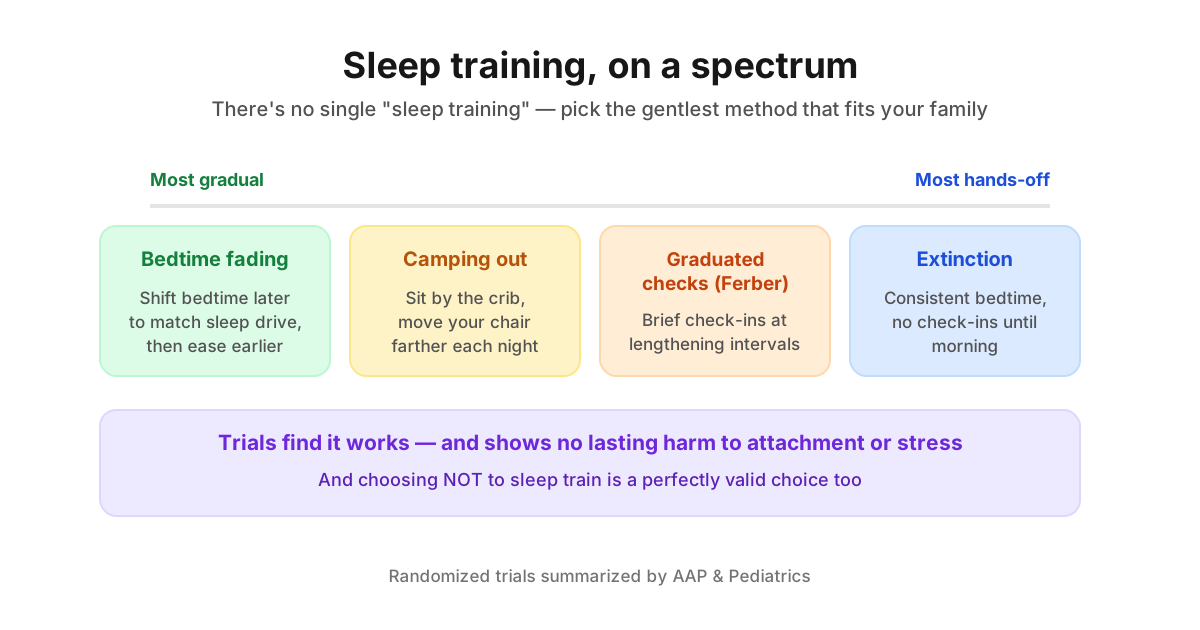
Few parenting topics generate more heat and less light than sleep training. One corner of the internet says you're harming your baby; another says you're failing them if they don't sleep through the night by 6 months.
Let's lower the temperature. Here's what each method actually involves, what the research actually shows — and why doing nothing is also a legitimate option.
First: what sleep training is (and isn't)
Sleep training means using behavioral techniques to help a baby learn to fall asleep independently — at bedtime and, by extension, when they surface between sleep cycles overnight. It is not night-weaning (that's a separate, feed-related question for your pediatrician), and it's not required. Plenty of babies eventually sleep fine without it, on a slower timeline.
Timing: behavioral methods are generally considered appropriate from about 4–6 months, not before. In the newborn phase, night waking is a feature, not a bug — see our newborn sleep survival guide. And whatever method you choose, the safe sleep ABCs still apply: alone, on the back, in a bare crib.
The methods, from most to least hands-off
Unmodified extinction ("cry it out")
Complete the bedtime routine, put baby down awake, leave, and don't return until morning (barring safety or illness checks). It's the oldest studied method and effective in trials — but it's emotionally brutal for many parents, and parental consistency is the whole game. A method you abandon on night two teaches your baby that crying for 45 minutes works.
Graduated extinction (the "Ferber method" / check-and-console)
Put baby down awake, leave, and return at timed intervals (say 3, then 5, then 10 minutes) for brief, boring reassurance — a pat and a calm word, no pickup, then out again. Intervals stretch over nights. This is the most-studied approach and the one with the strongest evidence base (more below).
Bedtime fading
A clever, low-tears option: temporarily set bedtime to the time baby actually falls asleep (even if it's 9:30 p.m.), so they're sleepy enough to drift off quickly, then shift bedtime earlier by 15 minutes every few nights. It harnesses sleep pressure instead of fighting it.
Camping out (chair method)
Sit beside the crib while baby falls asleep, gradually moving your chair toward the door over one to two weeks until you're out of the room. More gradual, fewer tears, slower results — and some babies find a present-but-not-helping parent more enraging. Worth knowing either way.
Pick up / put down and other gentle hybrids
Pick baby up when crying escalates, soothe, and return them drowsy. Minimal crying, maximal parental effort, and the least direct research — most evidence reviews group these under "parental presence" approaches.
What the evidence actually says
This is where the drama dissolves, because the research is unusually consistent.
Behavioral methods work for most families. A landmark review of 52 studies, summarized in the American Academy of Sleep Medicine's practice guidance (Mindell et al., 2006), found that about 80% of infants and toddlers showed meaningful improvement from behavioral sleep interventions, with extinction-based approaches and parent education having the strongest support.
Direct stress measurement found no red flags. A 2016 randomized controlled trial by Gradisar and colleagues in Pediatrics compared graduated extinction, bedtime fading, and a control group — and measured infant cortisol (a stress hormone) and mother-infant attachment. Both interventions improved sleep, and at 12 months there were no differences in attachment security or emotional/behavioral problems, and no concerning cortisol patterns.
The long-term follow-up came back clean. A five-year follow-up of a large Australian trial, published by Price and colleagues in Pediatrics, found that children who underwent behavioral sleep intervention as infants showed no differences in emotional health, behavior, sleep, stress regulation, or child-parent attachment at age six — no lasting harms, and also no lasting benefits. The honest summary: by school age, the kids are alright either way.
And the AAP's practical take: putting babies down drowsy but awake and allowing them space to settle is reasonable and safe — see healthychildren.org's guidance on helping babies fall asleep. For a plain-language summary of the same safety picture, Cleveland Clinic's overview of the cry-it-out method likewise notes that controlled-crying approaches have not been shown to cause lasting harm when used appropriately.
What the evidence does not say: that sleep training is mandatory, that babies who aren't sleep trained suffer, or that responding to your baby at night creates "bad habits" that can't change later.
If you decide to try it: a practical setup
- Clear it with your pediatrician — especially which night feeds (if any) still matter for your baby's age and growth.
- Pick a method that matches your tolerance. The best method is the one you can do consistently for two weeks. Inconsistency is harder on everyone than either committing or waiting.
- Anchor a boring, identical bedtime routine — bath, feed, book, song, crib. Keep the feed early in the routine so feeding-to-sleep isn't the final step.
- Start on a low-stakes week — not during travel, illness, or a daycare transition.
- Expect night 2–3 to be the worst (the "extinction burst"), then improvement by night 3–7 with extinction-based methods. Naps usually lag behind nights — many families tackle bedtime first and leave naps alone until nights are solid.
- Track it. Memory lies when you're exhausted; a simple log shows whether wake-ups are actually trending down. You can track nights and settle-times in your TinyWins journal and let the data settle the 3 a.m. doubts.
If you decide not to: that's fine too
Cosleeping-adjacent room-sharing (safely), feeding to sleep, rocking, waiting it out — these are valid choices with their own rich history across cultures. Sleep training is a tool, not a milestone. The trials above measured family outcomes like parental depression improving when sleep improved — so the right question isn't "what does the internet say?" but "is anyone in this house actually suffering?" If everyone's coping, there's nothing to fix.
And if night battles persist well into toddlerhood alongside other struggles, our piece on the science of toddler tantrums may pair well with this one.
This article is educational and not medical advice. Always check with your pediatrician/provider.